
Stop Repairing Recycling Carts: Start With a Better Base
If you’re running a recycling operation, you’ve probably replaced or repaired more poly carts than you’d like to admit. Cracked bodies get attention, but the real culprit hiding underneath is often the base.
Most failures don’t start with the poly. They start with what’s holding it up.
The Plywood Problem
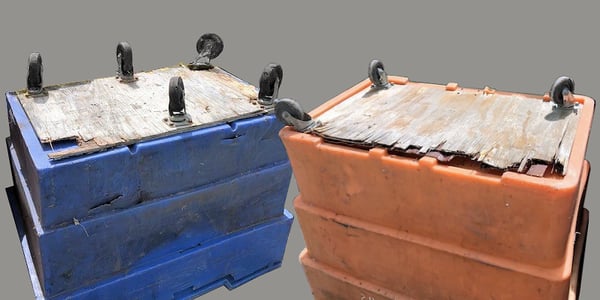
Many poly recycling carts on the market use plywood bases because they’re cheap to manufacture. On paper, it makes sense—plywood is lightweight, easy to work with, and keeps the initial price low.
But here’s what happens in actual recycling operations:
- Moisture exposure from rain, snow, or wet materials causes plywood to swell and warp
- Delamination occurs when the plywood layers separate under stress and weather exposure
- The wood around caster bolts splinters and cracks, which weakens the whole structure
- Irregular weight distribution from a warped base puts stress on the poly body, causing premature failure
You’re not just replacing bases. You’re replacing entire carts because the foundation failed.
The Steel Solution
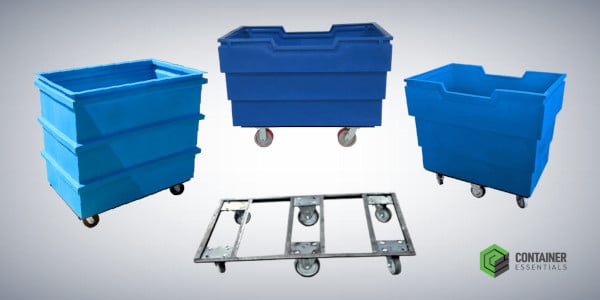
Painted steel bases solve the problem at the source:
Weather-Proof Construction
Steel doesn’t absorb moisture. Rain, snow, or wet recyclables won’t cause warping, swelling, or delamination. The paint offers an extra layer of corrosion resistance for outdoor storage yards.
Strength Under Load
Steel spreads the load evenly. Caster bolts anchor into steel instead of wood, which strips. The base won’t flex or warp.
Longer Cart Lifespan
The base holds up, the cart holds up. You won’t see stress cracks from a twisted foundation, and you won’t be replacing carts every two years.
The Real Cost of Replacement Cycles
Most recycling operations see plywood-base poly carts fail within 18-24 months. The bases warp, delaminate, or crack—and you’re back to ordering replacements.
Steel-base carts like the Grizzly SD routinely stay in service for 5+ years. That’s the difference between replacing your fleet 2-3 times or not replacing it at all.
And that’s before you factor in:
- Labor costs for cart repairs
- Downtime when carts are out of service
- Replacement part ordering and inventory management
- Safety risks from damaged carts
Make the Switch
If you’re tired of:
- Replacing carts every 18-24 months
- Dealing with warped bases that make carts hard to maneuver
- Budgeting for constant repairs and replacements
- Safety concerns from structurally compromised carts
It’s time to look at what’s underneath your poly body.
The base makes the cart. Choose steel.
Explore the Grizzly Family: The Grizzly SD is just one option in our line of steel-base poly carts. Check out the complete Grizzly cart family to find the right size and configuration for your operation.
Explore our Whole Grizzly Line of CartsReady to stop the replacement cycle? Request a quote on Grizzly SD steel-base poly carts →
Questions about the right configuration for your operation? Our team can help you spec the right cart, caster setup, and options for your specific application. Contact us →